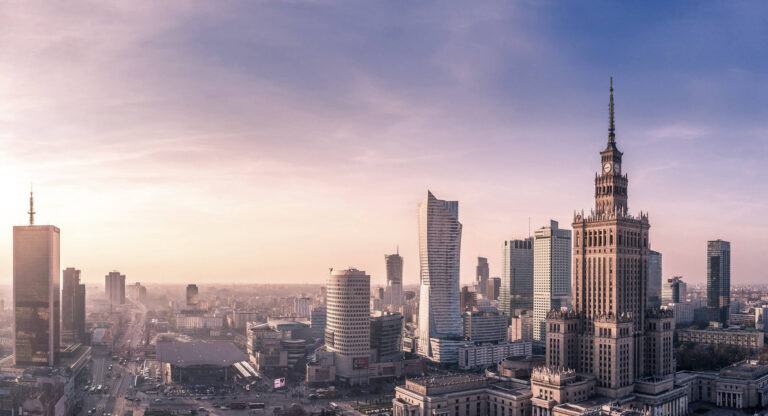

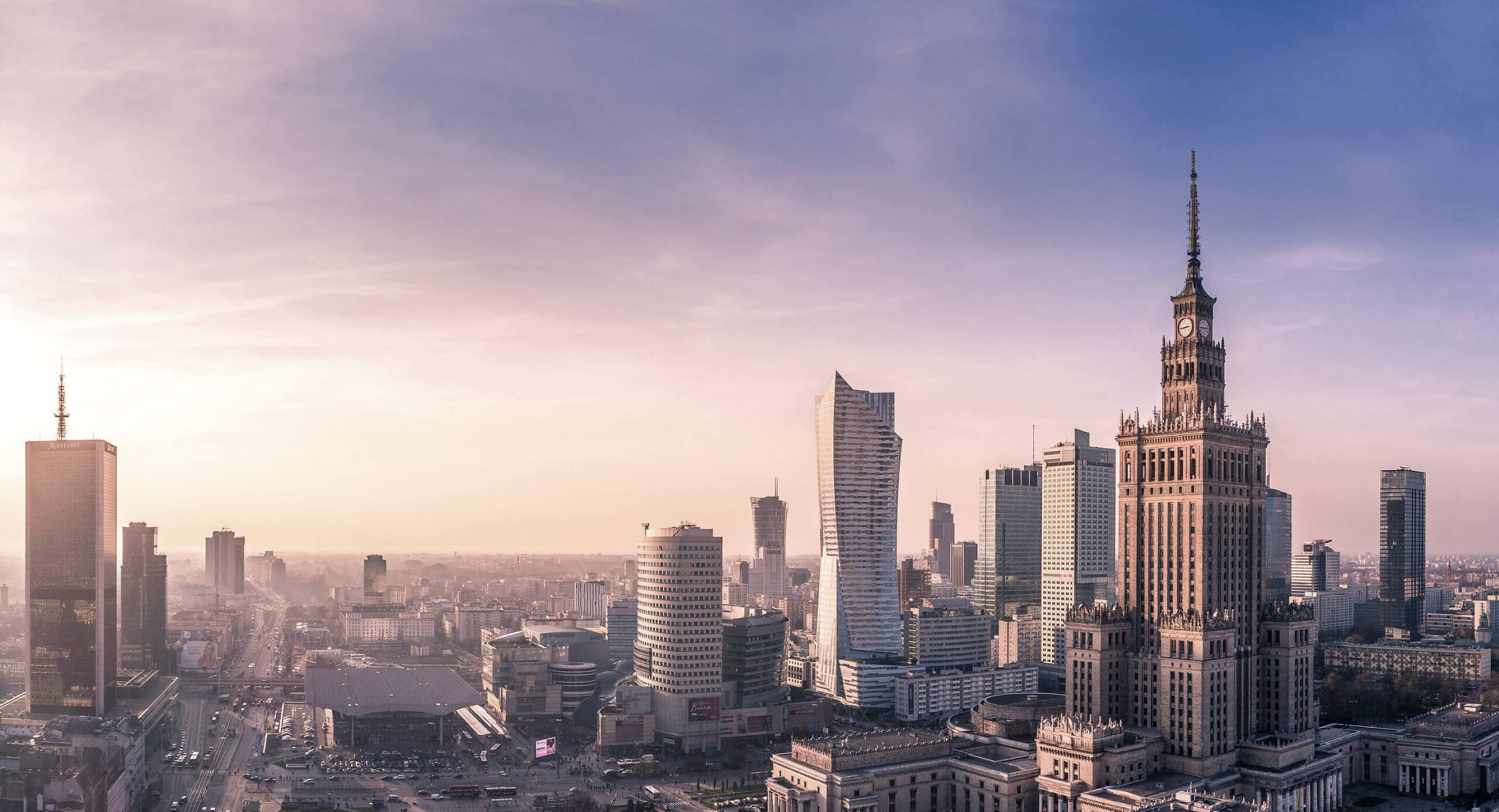
– Służewiec is a place that has undergone an impressive metamorphosis in recent years. Until a dozen years ago, it was mainly associated with the office market, today it is becoming a multifunctional urban area, where work space is combined with housing, recreation and culture . – In the latest edition of our publication, now in its fourth year, we analyze these changes, their impact on the shape of the district and the comfort of its residents.
– says Daniel Czarnecki, Head of Landlord Representation, Office Agency, Savills
– For years, many communities have been involved in making sure that Służewiec gets rid of the Mordor patch for good. Thanks to the changes that are happening before our eyes, this part of Mokotow is becoming a modern, well-conceived urban fabric – a place where you want to live and spend your free time, and where you work well –
concludes Rafal Miastowski, mayor of Mokotow.
Communication and greenery development
One of Służewiec’s biggest challenges over the years has been road infrastructure. Today, thanks to the extension of Woronicza and Suwak streets, the district has gained direct connections in the direction of Ochota and Ursynów, and the change in the organization of traffic at the Postępu exit has significantly facilitated the passage through Marynarska. In parallel, a network of bicycle paths has developed, making residents and employees more likely to choose unicycles.
In addition to road changes, the district has gained new green areas. The most important investment is the Linear Park along the railway tracks, which already serves both local residents and guests of nearby hotel facilities. More sections of the park are planned, as well as the development of areas along Woloska Street. Ultimately, 45,000 sqm of green space is planned for this part of Mokotow.
Office Służewiec – facts and figures
Although Służewiec is increasingly developing into residential and service functions, it is still one of Warsaw’s largest office zones. The total supply includes about 1.06 million sq. m. in 74 buildings, representing 17% of the capital’s total office stock and 31% of the space located outside the central areas.
At the same time, Służewiec is witnessing a trend, unique to the entire city, of reducing office stock. The reason is the lack of new investments and the demolition of unprofitable office buildings with high vacancy rates.
– Importantly, it is in Sluzewiec that we are seeing an increasing number of small changes that help employers attract talent. This is a direction of change that improves the city on the one hand and supports business on the other. Ahead of many building owners is a time of strategic decisions, which should be helped by agents, asset managers or strategists who know the specifics of the location.
Daniel Czarnecki adds.
The last building to be completed was the DSV headquarters (Q2 2020), while Curtis Plaza, the iconic office building from which Mordor began for many, was demolished in 2024. This is not the only office building demolished in Służewiec. In their place are mainly residential and living developments, i.e. apartments for institutional rent, the so-called PRS (Private Rented Sector) and private modern student housing.
Age of buildings and upgrades
The age structure of the buildings varies: 37% of the supply dates from 2005-2009, 24% of the stock was built between 2010 and 2014, and 23% is in office buildings from 2015-2020. Much of this development has undergone or is undergoing modernization (including Diuna, or formerly Marynarska Business Park, T-Mobile Office Park, Mokotów Nova).
Within the district, several smaller micro-areas stand out: Marynarska/Progress, Domaniewska Zachodnia and Wschodnia, punctuated by the hub of Woloska Street, Cybernetyki/Progress and Konstruktorska/Suwak. The average size of buildings in these areas varies by up to three times (from 7200 sqm at Cybernetyki/Progress to 22,300 sqm at Konstruktorska/Suwak).
Demand, vacancy and rental conditions
Sluzewiec still ranks among the top Warsaw hubs in terms of gross demand, although there has been a decline in recent years (from about 160,000 sqm leased annually in 2015-2019 to 125,000 sqm in 2020-2024). More than half of the contracts are renegotiations, indicating a strong attachment of companies to the location. At the end of 2024, the vacancy rate was around 19.7%, with nearly 208,000 sq. ft. remaining to be leased. sq. m. offices. As much as 56% of this space has remained vacant for 3 years and can be categorized as structural vacancy. Most vacant space is found in the areas of Woloska, Domaniewska Zachodnia and Marynarska/Progress, which are also the largest micro-areas in terms of office stock.
The high vacancy rate prompts office building owners to be flexible – incentive packages in the form of rent-free periods or subsidized fit-outs are attractive here. Base rents fluctuate between EUR 13.25-15.00/sqm per month, while in some B-class buildings they can be less than EUR 10. Maintenance costs (PLN 24.00-36.00/sqm) are added, and usually include utilities in common areas.
Retail and services in first floors of office buildings
The first floors of many office buildings are occupied by commercial and retail premises, which is of great importance to employees and local residents. It is estimated that the total area of such premises is 55,000 sq. m. (in 50 buildings), and they house stores, canteens, restaurants, beauty salons or medical centers, among others.
Flexible office spaces and coworking spaces
– Flexible offices are growing in popularity in Służewiec. There are currently 13 centers here offering a total of 24,000 sqm of space (about 2,550 workstations), representing 11.5% of the entire Warsaw flex office market and as much as 38% of the off-center offering –
says Thomas Jodar, head of Workthere Poland, Savills.
The largest operator is Adgar Poland, which has a total of 12,400 sqm in four buildings. The second largest are Spaces and New Work Offices with more than 2,800 sqm. It is possible that the trend of property owners creating flexible space on their own will grow. Examples include projects at Domaniewska 45 or the R34 building. Currently, the monthly cost of one coworking space in Służewiec is between PLN 1,200 and PLN 1,700.
Trade, services and entertainment in the Slutsk style
Służewiec has long been developing not only in terms of offices, but also in terms of housing, which translates into an increasingly rich retail and service offer. There are about 670 units in residential buildings and office buildings (in addition to the Westfield Mokotów offering). More than 100 of these are restaurants and food outlets, and another 100 are various types of grocery stores. Residents and employees also have at their disposal numerous beauty and hair salons, medical clinics, kindergartens, gyms and fitness clubs.
An integral part of Mokotow’s landscape is Westfield Mokotow, one of the first modern shopping centers in Poland, which opened in 2000 (then as Galeria Mokotow). Over the years, the facility has been expanded and modernized, adapting to the changing needs of customers.
Today, Westfield Mokotów is more than 68,000 sq. m. of retail space with a wide range of shopping, dining and entertainment options (234 stores and service outlets, 30 restaurants and cafes, a cinema, a gym and a children’s playroom.).
This shopping center is closely linked to the development of Służewiec – with the evolution of “Mordor” it has become a popular leisure destination for employees of the surrounding office buildings. Now, with more and more residential developments in the area, Westfield Mokotów is evolving into a more comprehensive local community center. Not only does it offer a premium segment (The Designer Gallery, exclusive beauty brands), but it is also expanding its assortment to include popular home furnishings stores, offerings for families with children and a wide range of services.
“Living” in Służewiec – PRS and dormitories
The institutional rental housing (PRS) segment has been growing in Poland since 2015, with nearly 2,240 apartments in 10 buildings currently operating in this format in Służewiec. Half of them were completed in 2023. – They account for almost 57% of the current supply of rental apartments in this part of the city. The largest project located on Bokserska Street (430 apartments) is owned by Heimstaden. In 2025, the district’s PRS market will expand with the LifeSpot development at 5a Postępu Street.
Służewiec remains an attractive location for PRS investors thanks to its good transportation links, office and retail facilities, and a steadily developing residential fabric.
Służewiec is also attracting investors in the PBSA (Purpose Built Student Accommodation) sector. Two private dormitories owned by Kajima Student Housing Limited are currently operating here: the Wilanowska Student Depot (opening in 2023, about 600 places) and the Suwak Student Depot (launched in 2019). Two more projects are expected to be built by 2026. One of them will offer about 600 places and is Speedwell’s first investment in Poland. The other is an investment where StudentSpace will be the operator and will offer 470 places for students.
The dynamic growth of students in Warsaw (almost 257,000 people studied in the capital in the 2023/2024 academic year) and the limited number of places in university dormitories (for only 7% of the total student population) are a promising factor for the development of this market. In view of the unprofitability of some older office buildings, further adaptation of existing facilities to dormitories or PRS investments cannot be ruled out.
Wioleta Wojtczak, director of market research and analysis at Savills comments: “Służewiec is a fascinating case to analyze – changes are occurring on many levels and involve the transformation of a neighborhood that for years operated under a uniform model. This requires an in-depth understanding, the ability to read trends and combine different concepts. It can be seen as a unique case study and a great example of the (r)evolution that is taking place before our eyes “
Multifunctional district and plans for the future
Sluzewiec is no longer exclusively an “office basin” – housing, services, food and retail space and modern coworking concepts are developing dynamically here. More PRS estates are being built, private dormitories, and soon – a new elementary school on Konstruktorska Street. The district is thus gaining a whole new quality of life, where work, study and entertainment can function in an integrated urban space.
– The second edition of the 2019 report began by stating that Służewiec was entering a decisive phase, which was considered by many to be an overly optimistic outlook. Today, in 2025, we see how many of the announced changes have already been implemented –
emphasizes Jakub Kompa of the Better Służewiec Association. Służewiec is gaining a completely new face: a modern, multifunctional place friendly to residents, employees and students.
Full version of the report: Służewiec 2025 Report