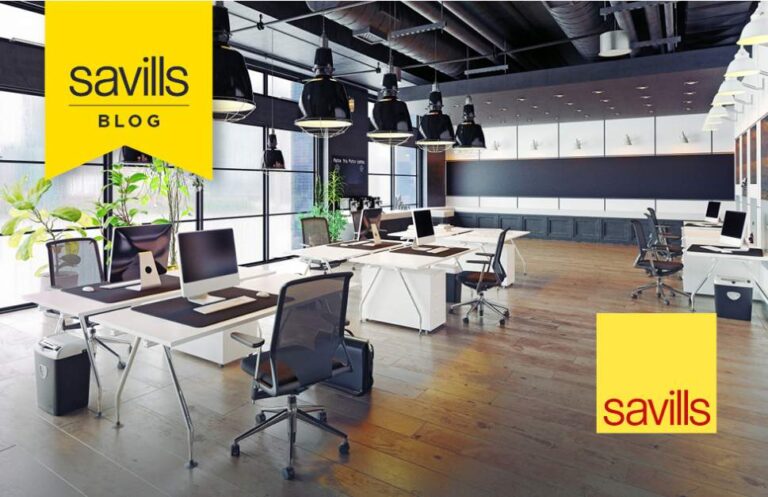

Office property owners and tenants have accepted that hybrid work will stay with us for longer. After nearly three years of combining remote and fixed work, companies are better able to estimate how much office space they actually need. Offices are still needed, but the strategies for large corporations’ real estate portfolios and their approach to shaping the work environment are changing.
New trends in the office market in 2024
Contents
How are tenants adapting to the changing reality of the office market? What challenges and expectations do companies have after the past years of digital transformation caused by the COVID-19 pandemic? These questions were answered by Karol Grejbus, director in the tenant representation department at Savills.

Adapting companies to the new reality of the office market
The year 2024 will bring significant changes for companies as tenants of office space. We will see them adapt to new working models. On the one hand, we will see further changes in the scaling of demand for office space, while on the other, we will see an increased interest in high standards in attractive locations. This is a trend that generates savings, but also poses new challenges.
The year 2024 will bring significant changes for companies as tenants of office space. We will see them adapt to new work models.
Karol Grejbus, director in the tenant representation department at Savills
Time required for office rentals and leases
The rental market is also evolving. The processes of relocating or renegotiating leases now take longer, often as long as 12 months or more. Moreover, we are noticing a tendency for tenants to prefer shorter contracts in renegotiation processes, which is in line with the dynamically changing market. Green leases are becoming not insignificant for the market. Starting in 2024, a certain group of companies, according to the CSRD, will have to start collecting the data necessary for new ESG reports.
Flexibility and new work models
Pandemic has shown us the benefits of flexible work models. Many companies are moving toward a hybrid model, combining remote work with an in-office presence. This translates into less need for renting a traditional office and opens the door for more flexible solutions, such as serviced offices.

Karol Grejbus is responsible for developing an offering dedicated to office space tenants and for providing companies with comprehensive support in the leasing process and assistance in responding to the current challenges of providing employees with office space adapted to new work models.
Multipurpose space and innovation
Modern offices are increasingly focusing on multifunctionality. Instead of traditional layouts, companies are opting for spaces tailored to different needs – conference rooms, collaboration zones, coworking spaces. Investments in modern technologies and tools allow more efficient office management, which is also visible in costs. New solutions based on artificial intelligence (AI) will appear on the market. However, these innovative solutions will have to address growing concerns, including data confidentiality, which currently inhibit their implementation in corporations. The development of PropTech (Read our article on PropTech solutions), or technologies dedicated to real estate, will therefore not only be a matter of introducing new tools, but also of adapting and integrating them into existing systems and business processes. At the level of tools, we are facing an evolution rather than a revolution. We also expect a marriage between ESG and PropTech, where data measurement and optimization will become part of the certification associated with the implementation of ESG activities .
Organizational culture and office space
Office space is critical to building organizational culture. Companies are increasingly designing offices as inspiring and welcoming workplaces that foster employee engagement and efficiency. Employees and employers have different expectations for productivity: employees focus on individual productivity in a well-organized home space, while employers prioritize team efficiency, which often comes with challenges in hybrid work. However, what is often overlooked in the discussion of this topic is that it is important for an organization to think in terms of collaboration and efficiency of the entire team in order to operate effectively.

In conclusion, 2024 will be a time of new challenges, but also opportunities for companies leasing office space. Changing needs, as well as trends toward space optimization and flexibility in leases, draw a new picture of the office market.
Stay tuned for our upcoming posts, where we will continue to analyze and discuss current trends in the real estate market!
Authors: